The 5 Best Hidden Gem Players to Buy Before The Hype
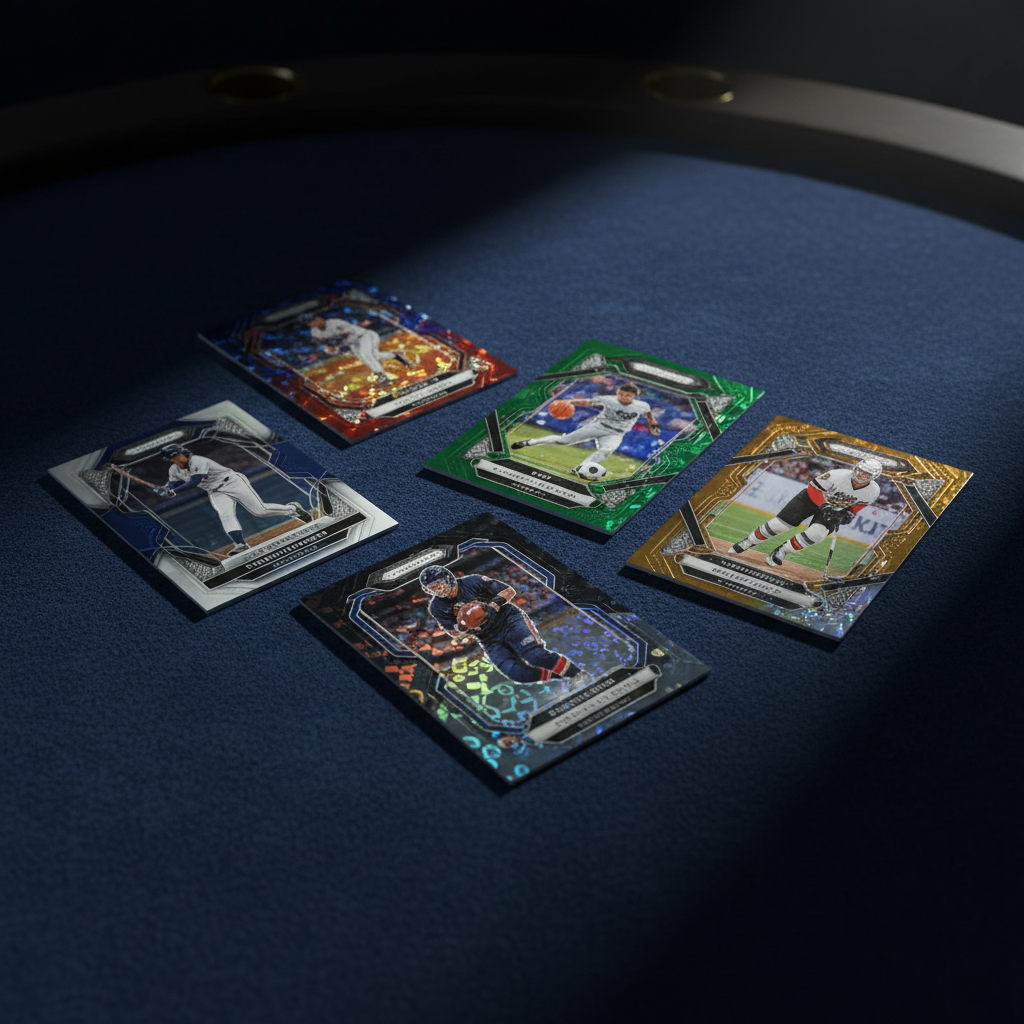
The most significant gains in the sports card market are made by identifying elite talent before the mainstream hype machine anoints them. While others chase overpriced marquee rookies, the smart money is on undervalued players with All-Star potential simmering just beneath the surface. This guide bypasses the obvious names and focuses on five specific players whose current card values massively lag their on-field performance and future ceiling. We analyzed statistical trajectories, market sentiment, and population reports to find specific rookie cards that present the best value today. Our methodology prioritizes proven performance over speculative hype, identifying market inefficiencies that create clear buying opportunities for the discerning collector.
How We Picked
- Player's Statistical Ceiling
- Card Scarcity (PSA Population)
- Current Market Value
- Hype Potential
- Positional Value Inefficiency
At a Glance
| Rank | Pick | Best For | Price Range |
|---|---|---|---|
| 1 | 2022 Panini Prizm Silver Kyle Hamilton RC #246 | The investor looking for a high-floor, low-risk play based on proven, elite performance. | $40-$60 raw, $150-$225 PSA 10 |
| 2 | 2021 Panini Prizm Silver Alperen Şengün RC #325 | The calculated risk-taker who understands how to capitalize on market overreactions to player injuries. | $60-$90 raw, $250-$400 PSA 10 |
| 3 | 2019 Bowman Chrome Draft Autograph Grayson Rodriguez #CDA-GR | The forward-looking baseball investor willing to take on calculated risk for ace-level upside. | $80-$120 raw/ungraded, $300-$500 PSA 10 |
| 4 | 2021 Panini Select Concourse Silver Trey Murphy III RC #65 | The patient speculator looking for a high-reward play on a player whose role could dramatically expand. | $20-$30 raw, $80-$120 PSA 10 |
| 5 | 2022 Topps Chrome Platinum Anniversary Riley Greene RC #500 | The purist baseball fan who wants to invest in a great young hitter before he becomes a household name. | $8-$12 raw, $40-$60 PSA 10 |
1. 2022 Panini Prizm Silver Kyle Hamilton RC #246
The Hobby's Most Undervalued Defensive Superstar.
Kyle Hamilton is arguably the best safety in the NFL, yet his key rookie card trades for less than most unproven backup quarterbacks. The 2022 Prizm Silver RC has a PSA 10 population of less than 400, creating a supply-side bottleneck for a player who is a perennial All-Pro candidate on a major market team. This is a classic market inefficiency; defensive players are chronically undervalued, and Hamilton is the best of the best.
Best for: The investor looking for a high-floor, low-risk play based on proven, elite performance.
Price range: $40-$60 raw, $150-$225 PSA 10
Pros
- Extremely low price for an established All-Pro talent.
- Low PSA 10 population (~380) creates scarcity.
- Plays for a high-visibility, successful franchise.
Cons
- Defensive players have a lower value ceiling than offensive skill players.
- Market liquidity is thinner than for quarterbacks or wide receivers.
2. 2021 Panini Prizm Silver Alperen Şengün RC #325
A Generational Playmaking Big Man on a Temporary Injury Discount.
Before his 2024 injury, Şengün was on a trajectory to be the next Nikola Jokic-style offensive hub, averaging 21/9/5. That potential has not vanished. His late-season injury created a significant dip in his card prices, presenting a perfect buy-low window. The Prizm Silver is his key, non-numbered rookie card, and its current price does not reflect his ceiling as a potential franchise cornerstone.
Best for: The calculated risk-taker who understands how to capitalize on market overreactions to player injuries.
Price range: $60-$90 raw, $250-$400 PSA 10
Pros
- Significant price dip due to a short-term injury has created a buying opportunity.
- Unique, high-upside skillset that draws comparisons to top-tier players.
- Plays a position that is rapidly gaining value in the modern NBA.
Cons
- Comeback from injury carries inherent risk.
- Plays on a young, rebuilding team, limiting national TV exposure.
3. 2019 Bowman Chrome Draft Autograph Grayson Rodriguez #CDA-GR
The Ace of a Rising Powerhouse Whose Cards Haven't Broken Out Yet.
Pitcher cards are risky, which is exactly why there's an opportunity here. Rodriguez is the best young arm on the best young team in baseball, the Baltimore Orioles. His 2019 Bowman Chrome Draft Auto is his single most important card, signed on-card from the premier prospecting product. As the Orioles become perennial contenders, their ace will see a massive value correction. Buying now is buying into a future Cy Young contender at a fraction of the price.
Best for: The forward-looking baseball investor willing to take on calculated risk for ace-level upside.
Price range: $80-$120 raw/ungraded, $300-$500 PSA 10
Pros
- Key on-card autograph from the industry-standard prospecting set.
- Anchor pitcher for one of the most exciting young teams in sports.
- Pitcher volatility keeps the entry price artificially low relative to his potential.
Cons
- Pitchers carry a higher injury risk than position players.
- The market for pitchers is smaller and more volatile than for hitters.
4. 2021 Panini Select Concourse Silver Trey Murphy III RC #65
An Elite Sharpshooter Primed for a Bigger Role.
Trey Murphy III is one of the NBA's most efficient and dynamic '3-and-D' players, shooting nearly 40% from three for his career while being a hyper-athletic defender. He is currently the third or fourth option in New Orleans, but his per-minute stats suggest a massive ceiling if his usage increases due to trade or injury. His 2021 Select Silver is an affordable, liquid rookie card from a major set, offering a low-cost entry point to a player with explosive scoring potential.
Best for: The patient speculator looking for a high-reward play on a player whose role could dramatically expand.
Price range: $20-$30 raw, $80-$120 PSA 10
Pros
- Low-cost entry point for a player with an elite, modern NBA skillset.
- Clean, popular rookie card from a mid-high end brand.
- Clear path to a larger role and statistical explosion.
Cons
- Currently a role player, limiting his short-term ceiling.
- Success is dependent on an increased role that may not materialize.
5. 2022 Topps Chrome Platinum Anniversary Riley Greene RC #500
A Former Top Prospect Quietly Becoming a Star Hitter.
A former #5 overall pick, Riley Greene has improved every year and is blossoming into a high-average, high-OBP force for the Detroit Tigers. Because he plays in a smaller market, his national profile is still muted, and his card prices remain highly reasonable. The 2022 Topps Chrome Platinum Anniversary set is a stunning, retro-inspired release that has become a collector favorite, and this Greene RC is a prime, undervalued card from that set. As his power develops and he enters the All-Star conversation, this card will not stay this cheap.
Best for: The purist baseball fan who wants to invest in a great young hitter before he becomes a household name.
Price range: $8-$12 raw, $40-$60 PSA 10
Pros
- Top-tier prospect pedigree with a clear upward statistical trend.
- Card is from a highly popular and aesthetically pleasing modern set.
- Small market/team discount creates significant value.
Cons
- Lacks elite home run power compared to top-tier sluggers.
- Plays for a team that limits his national media exposure.
How to Buy
'''### How to Buy Hidden Gems The Right Way
1. Where to Source Cards: For graded cards (PSA, BGS, SGC), eBay is still the king due to its volume and buyer protection. For raw cards, especially those you intend to grade, platforms like COMC (Check Out My Cards) and MySlabs are excellent. COMC allows you to see high-resolution scans before you buy, which is crucial for evaluating condition. MySlabs has lower fees than eBay and is favored by many high-volume traders.
2. Evaluating Raw Cards for Grading: When buying raw, you are hunting for a "gem." This means you need to be meticulous. For modern Chrome cards (like Prizm and Topps Chrome), the primary defects are surface scratches and print lines (faint, horizontal lines across the card). Use a bright light and tilt the card at multiple angles to inspect the surface. Check the centering using a ruler or a centering tool; 55/45 is usually the cutoff for a PSA 10. Inspect the corners and edges for any whitening or soft spots. If the cost of the raw card plus the grading fee (typically $20-$40) is significantly less than the price of a PSA 10, it's a good candidate for grading.
3. The Economics of Grading: Let's use the Kyle Hamilton Prizm Silver as an example. You can buy a clean-looking raw copy for around $50. The fee for grading a card of this value is about $25 with PSA. Add in shipping, and your all-in cost is roughly $80. A PSA 10 sells for $150-$225. A PSA 9 sells for $60-$80. In this scenario, if you are confident you have a Gem Mint card, grading is a no-brainer. If it comes back a 9, you essentially break even. This risk/reward calculation is fundamental to investing in modern cards.
4. Common Pitfalls to Avoid:
- Chasing Hype: The entire point of this guide is to buy before the hype. Don't buy a player after they've had a 40-point game and their prices have already tripled. The time to buy was the week before.
- Ignoring Population Reports: Don't just buy the player; buy the card. A low-population card of a great player will always outperform a mass-produced card of the same player. Use the PSA Population Report (free on their website) to research a card's scarcity before you buy.
- Forgetting about Liquidity: While we are seeking undervalued gems, it's important that the market for these cards exists. Sticking to flagship sets like Prizm, Topps Chrome, and Bowman Chrome ensures that when it's time to sell, you will have a deep pool of active buyers. '''
Frequently Asked Questions
Why focus on Prizm and Topps Chrome rookie cards?
These are considered the flagship, 'blue chip' rookie cards for basketball/football (Prizm) and baseball (Topps Chrome). They are the most recognized, liquid, and widely collected rookie cards in the modern hobby, making them the safest and most reliable investments.
Are pitcher cards a bad investment?
They are not a bad investment, but they are a higher-risk one. Pitchers have a higher rate of injury, which can dramatically affect their card values. However, this risk is often priced in, meaning you can acquire cards for elite pitchers at a significant discount compared to equally talented hitters. For investors with a higher risk tolerance, the returns can be substantial.
What is the difference between a raw card and a graded card?
A 'raw' card is a card that has not been authenticated or graded by a third-party service like PSA, BGS, or SGC. A 'graded' card has been sent to one of these companies, which encapsulates it in a protective slab with a grade from 1 to 10. Graded cards provide certainty about authenticity and condition, making them easier to price and sell.
How much of a portfolio should be allocated to these types of 'hidden gem' plays?
This depends on your risk tolerance. A balanced portfolio might have 50% in established legends (Jordan, Mantle, Brady), 30% in current 'blue chip' stars (Mahomes, Ohtani, Jokic), and 20% allocated to these higher-risk, higher-reward hidden gem players. This allows you to build a stable base while still having significant upside potential.