The 5 Best Hidden Gem Sports Cards to Buy Before The Hype
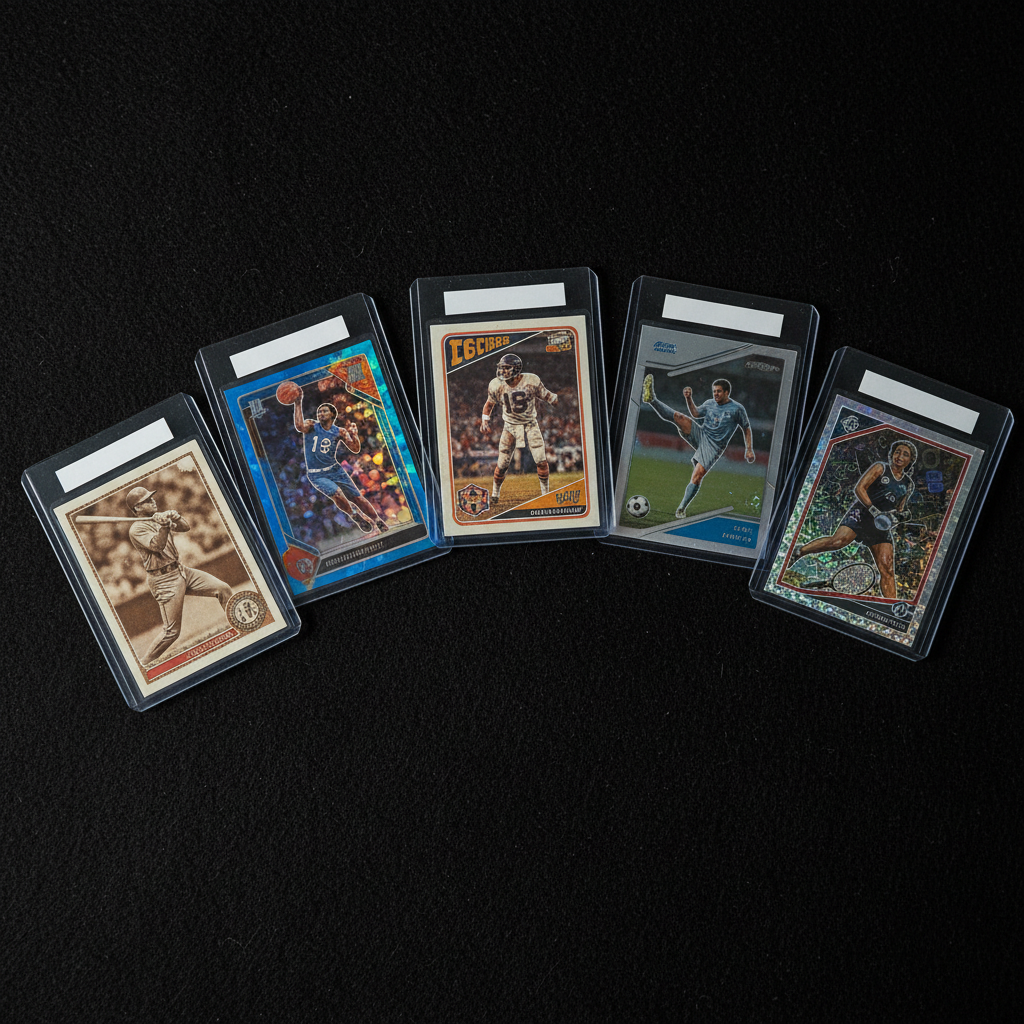
The single best way to generate alpha in the sports card market is to buy elite talent before the rest of the world realizes it. This guide is for serious collectors and investors looking to identify players on the cusp of superstardom, whose card values have not yet priced in their ultimate ceiling. We analyzed dozens of players across the major sports, focusing on a combination of advanced performance metrics, team trajectory, and current market sentiment to find true dislocations between talent and price. Our methodology prioritizes flagship rookie cards (Prizm, Topps Chrome) of players with All-NBA, MVP, or generational potential that are currently undervalued relative to their peers or historical comps. These are the cards to buy and hold now, before they become household names and their prices reflect it.
How We Picked
- Player Potential & Ceiling
- Current Market Value vs. Peers
- Card Liquidity & Popularity
- PSA 10 Population Scarcity
- Team/Market Trajectory
At a Glance
| Rank | Pick | Best For | Price Range |
|---|---|---|---|
| 1 | 2020 Panini Prizm #258 Anthony Edwards (PSA 10) | The investor who wants a blue-chip rookie of a future MVP candidate at a relative discount. | $50-$80 raw, $300-$350 PSA 10 |
| 2 | 2022 Topps Chrome #203 Julio Rodriguez Refractor (PSA 10) | The patient investor looking to buy a future baseball icon during a temporary market dip. | $40-$60 raw, $200-$250 PSA 10 |
| 3 | 2022 Panini Prizm #248 Jalen Williams Silver (PSA 10) | The savvy investor who understands that a championship team's #2 star is often the best value bet. | $60-$90 raw, $250-$300 PSA 10 |
| 4 | 2023 Panini Prizm #339 C.J. Stroud (PSA 10) | The growth investor willing to pay a premium for a shot at the next Patrick Mahomes. | $70-$100 raw, $350-$400 PSA 10 |
| 5 | 2022-23 Topps Chrome UEFA #47 Evan Ferguson Refractor (PSA 10) | The global investor looking for high-risk, high-reward international prospects. | $20-$30 raw, $100-$150 PSA 10 |
1. 2020 Panini Prizm #258 Anthony Edwards (PSA 10)
The next face of the NBA is hiding in plain sight.
Anthony Edwards is on a clear trajectory to being a perennial MVP candidate and the unquestioned leader of a title-contending team. Yet, his core Prizm rookie card trades at a significant discount to peers from prior classes with similar career arcs. A PSA 10 can be acquired for $300-$350, a price that seems absurdly low for a player with his explosive talent and marketable personality. The pop count is high, but this is a liquid, benchmark card that will be the key indicator of his market as he enters his prime.
Best for: The investor who wants a blue-chip rookie of a future MVP candidate at a relative discount.
Price range: $50-$80 raw, $300-$350 PSA 10
Pros
- Explosive, multi-talented guard with 'face of the league' potential.
- Plays on a young, ascending team in the Western Conference.
- Current price is a fraction of comparable young superstars.
Cons
- High PSA 10 population means only gem mint copies are worth investing in.
- Market is already hot, so finding deals requires patience.
2. 2022 Topps Chrome #203 Julio Rodriguez Refractor (PSA 10)
A five-tool superstar whose market cooled, creating a perfect entry point.
After a historic rookie season, J-Rod's follow-up was merely excellent, not legendary. That market 'disappointment' has created the single best buying opportunity for a young baseball player with Hall of Fame potential. His 2022 Topps Chrome Refractor is his definitive rookie card, and PSA 10 prices have settled in the $200-$250 range — a steal for a player with a 30/30 season already under his belt. As the Mariners improve and he enters his prime, this price will look like a gift.
Best for: The patient investor looking to buy a future baseball icon during a temporary market dip.
Price range: $40-$60 raw, $200-$250 PSA 10
Pros
- Rare combination of power, speed, and defense.
- Flagship Topps Chrome Refractor is a blue-chip, liquid card.
- Market has cooled off from its initial peak, offering a better entry price.
Cons
- Baseball card market can be more volatile than basketball or football.
- Player performance can fluctuate year-to-year.
3. 2022 Panini Prizm #248 Jalen Williams Silver (PSA 10)
The most undervalued player on a championship contender.
Playing alongside Shai Gilgeous-Alexander and Chet Holmgren, Jalen 'J-Dub' Williams is often the overlooked star on the OKC Thunder. But he's a hyper-efficient, clutch, three-level scorer who would be the #1 option on many other teams. His Silver Prizm rookie, a modern classic, is bafflingly affordable, often selling for under $300 in a PSA 10. As the Thunder make deep playoff runs over the next 5-7 years, J-Dub's role and profile will only grow, making this the best value card on the best young team in the NBA.
Best for: The savvy investor who understands that a championship team's #2 star is often the best value bet.
Price range: $60-$90 raw, $250-$300 PSA 10
Pros
- Extremely efficient and versatile offensive player.
- Key #2 or #3 option on a legitimate title contender.
- Priced far below other players from his draft class with less team success.
Cons
- Will likely never be the #1 option on his team.
- Silver Prizms have a high print run, though demand is also high.
4. 2023 Panini Prizm #339 C.J. Stroud (PSA 10)
Betting that a historic rookie season is the new standard, not an outlier.
It's rare to call a player who just had one of the greatest rookie QB seasons ever a 'hidden gem,' but the bet here is on the trajectory. C.J. Stroud's Prizm rookie price is high, but it's not 'future Hall of Famer' high yet. A PSA 10 currently sits in the $350-$400 range. If you believe his rookie year is his floor and he becomes the next Mahomes-level QB, this price is a bargain. The risk is that he's already priced to perfection, but his poise, accuracy, and leadership suggest this is just the beginning. This is a high-risk, high-reward play on an emergent elite talent at the most important position in sports.
Best for: The growth investor willing to pay a premium for a shot at the next Patrick Mahomes.
Price range: $70-$100 raw, $350-$400 PSA 10
Pros
- Record-setting rookie season for a QB.
- Plays the most valuable position in the card market.
- Liquid, benchmark rookie card with massive popular appeal.
Cons
- High entry price carries significant risk.
- Extremely high pop count will require a PSA 10 for any real investment thesis.
- Vulnerable to a 'sophomore slump' market correction.
5. 2022-23 Topps Chrome UEFA #47 Evan Ferguson Refractor (PSA 10)
The Premier League's next great striker, available at a prospect price.
For investors with a global view, Evan Ferguson is a prime target. He's a teenage striker for Brighton who has already shown elite goal-scoring instincts ('goal-scoring corrected goals per 90' of 0.52) in the world's toughest league. His first major Topps Chrome Refractor can be found for under $150 in a PSA 10. For a player with his ceiling, who is almost certain to get a big-money move to a club like Manchester United, Chelsea, or even Real Madrid in the coming years, this card holds enormous potential. It's an opportunity to invest in the next global superstar before the world takes notice.
Best for: The global investor looking for high-risk, high-reward international prospects.
Price range: $20-$30 raw, $100-$150 PSA 10
Pros
- Huge ceiling in the world's most popular sport.
- Almost guaranteed to move to a larger, more popular club.
- Extremely low price point for a key rookie card of a potential superstar.
Cons
- Soccer card market is less established in the US.
- Young prospects are notoriously volatile; injury or poor form is a major risk.
- UEFA set is slightly less desirable than a Premier League-specific set.
How to Buy
'''
How to Invest in Under-the-Radar Talent
Finding the next big thing is only half the battle; executing the purchase is the other. Here’s our advice for buying smart.
1. Price Analysis is Non-Negotiable: Never buy blind. Use tools like 130point.com to see real-time eBay sold prices (not just asking prices). For broader market trends and index-style analysis, a subscription to Card Ladder is the industry standard. This data will help you understand if a card is truly undervalued or if you're just looking at an inflated asking price.
2. To Grade or Not to Grade: For modern cards like the ones on this list, a pristine grade (PSA 10 or BGS 9.5) is essential for maximizing investment value. The population reports for these cards are often high, meaning the market is saturated with lower grades. If you buy a 'raw' (ungraded) card, inspect it meticulously for centering, corners, edges, and surface. A good rule of thumb: unless you're confident it can gem, buy a card that's already graded. The cost of grading ($25-$50 per card at PSA) plus the risk of a lower-than-expected grade often makes buying a confirmed PSA 10 cheaper in the long run.
3. Sourcing and Authentication: eBay is the most common marketplace, but look for sellers with long, positive track records. eBay's Authenticity Guarantee for cards over $250 has significantly reduced fraud. COMC (Check Out My Cards) is another excellent source, especially for buying raw cards to send for grading. For direct deals, attend local card shows or join reputable Facebook groups, but always use a secure payment method like PayPal Goods & Services.
4. Common Pitfalls:
- FOMO (Fear Of Missing Out): Don't chase a card as its price is spiking. Wait for the market to cool. There is always another dip.
- Ignoring Population Reports: A low-numbered parallel is great, but if the base card has a PSA 10 pop of 50,000, it will struggle to see significant long-term appreciation.
- Falling in Love with a Player: Remain objective. If a player suffers a career-altering injury or their performance permanently declines, be prepared to cut your losses. Your goal is return on investment, not loyalty. '''
Frequently Asked Questions
Is it better to buy raw cards and grade them myself?
For most investors, no. The costs of grading, shipping, and the risk of receiving a grade lower than a 10 (Gem Mint) often make it more economical to buy a card that has already been graded a PSA 10. Only attempt to grade raw cards if you are extremely confident in your ability to spot flawless cards.
Why focus on PSA 10 grades?
In the modern card market (2010-present), production quality is high, leading to large populations of graded cards. A PSA 10 signifies a 'gem mint' card, the best of the best. This grade commands a significant premium and is considered 'investment grade,' while lower grades (PSA 9, 8, etc.) are typically seen as 'collector grade' with much lower value and liquidity.
How long should I plan to hold these cards?
These picks are based on a 3-5 year investment horizon. The thesis for each card is that the player's career trajectory and market profile will significantly increase over that time. Sports card investing requires patience; these are not 'get rich quick' assets.
What is a 'Silver Prizm' or 'Refractor' and why is it important?
A 'Refractor' (from Topps Chrome) or 'Silver Prizm' (from Panini Prizm) is the base-level, non-numbered parallel of a card that has a distinct rainbow or holographic finish. They are not as rare as numbered parallels, but they are highly coveted by collectors and are considered the iconic, must-have version of a player's rookie card outside of the standard base.