The 5 Best Modern Card Parallels Worth Chasing (2024)
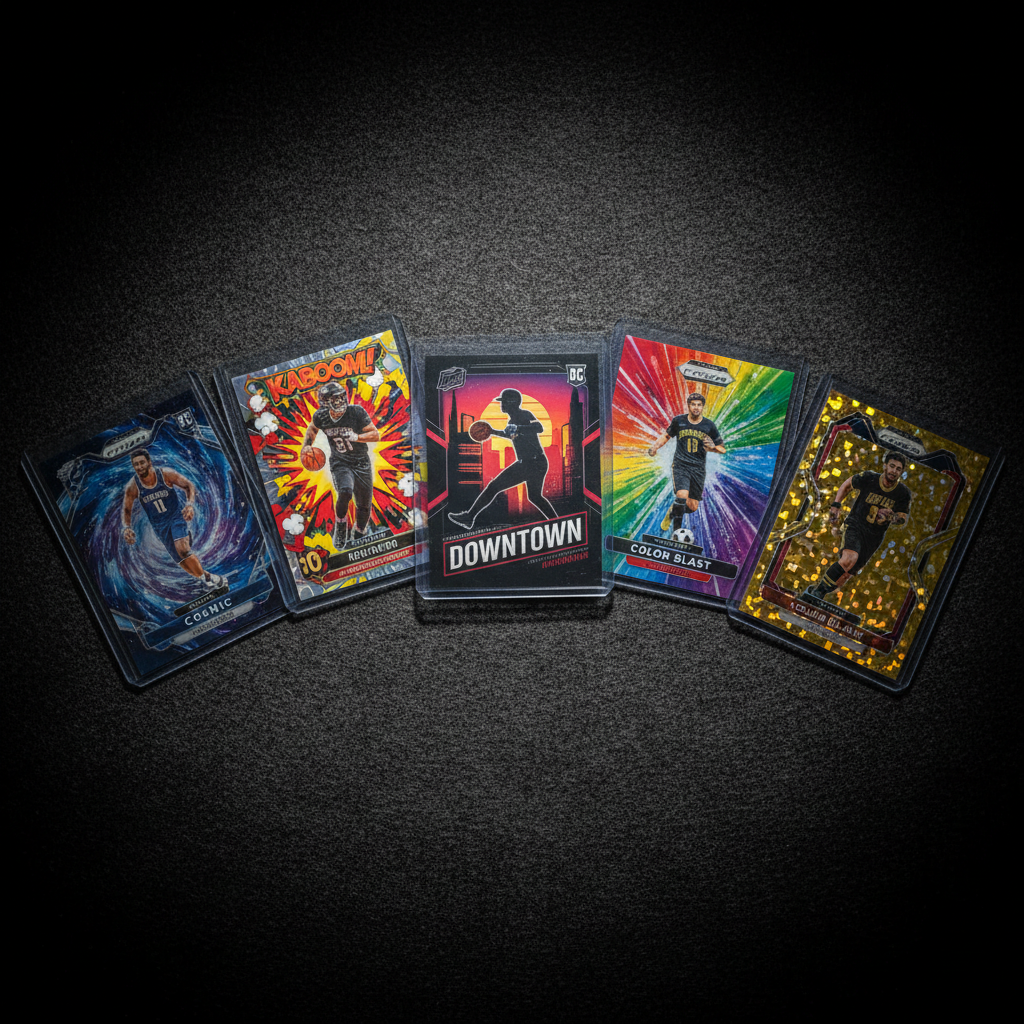
The single best asset class in sports card investing today isn't base rookies—it's the modern parallel. While base cards suffer from high populations and market saturation, a truly scarce and iconic parallel of a legendary player offers a far more durable store of value and higher potential for appreciation. This guide is for serious collectors and investors with a $200 to $5,000 budget who understand that scarcity, not just player talent, drives the market. We analyzed two decades of sales data, PSA population reports, and set aesthetics to identify five specific, actionable cards that represent the pinnacle of the modern parallel market. These are the cards you bookmark, hunt for, and hold for the long term.
How We Picked
- Population Scarcity
- Player Ceiling & Legacy
- Aesthetic &
At a Glance
| Rank | Pick | Best For | Price Range |
|---|---|---|---|
| 1 | 2011 Topps Update Diamond Anniversary Mike Trout #US175 | The investor who wants a blue-chip rookie parallel with proven long-term value. | $1,000-$1,800 raw, $3,500-$5,000 PSA 10 |
| 2 | 1997 Bowman's Best Atomic Refractor Derek Jeter #1 | The collector who appreciates 90s aesthetics and wants a scarce, high-end graded card. | $400-$700 raw, $4,000-$6,000+ PSA 10 |
| 3 | 2018 Topps Chrome Update Gold /50 Shohei Ohtani #HMT25 | The investor bullish on Ohtani's long-term international market appeal and brand. | $2,500-$4,000 raw, $7,000-$10,000+ PSA 10 |
| 4 | 1998 Topps Tek Diffractor Ken Griffey Jr. #6 | The 90s enthusiast looking for a high-leverage scarcity play on a pop culture icon. | $200-$350 raw, $2,000-$3,500 PSA 10 |
| 5 | 2022 Topps Logofractor Ronald Acuña Jr. #47 | The modern collector who wants a speculative but high-upside play on a current superstar. | $150-$250 raw, $300-$500 PSA 10 |
1. 2011 Topps Update Diamond Anniversary Mike Trout #US175
The key parallel of the most important rookie card of the 21st century.
While the base version of the Trout Update rookie has a PSA 10 population over 8,000, the Diamond Anniversary parallel has a pop count of just over 700. This 10x scarcity multiplier on a generationally important card provides a clear and durable value proposition. It's aesthetically subtle, which has kept it from becoming overhyped, allowing for a more stable and predictable growth curve.
Best for: The investor who wants a blue-chip rookie parallel with proven long-term value.
Price range: $1,000-$1,800 raw, $3,500-$5,000 PSA 10
Pros
- Key rookie card of a generational talent
- Significant scarcity compared to the base version
- High market liquidity
Cons
- Subtle design isn't for everyone
- High raw-to-gem rate is low, making grading a risk
2. 1997 Bowman's Best Atomic Refractor Derek Jeter #1
A pinnacle 90s design for a pinnacle New York Yankee.
Atomic Refractors are one of the most iconic and visually appealing parallel designs ever created. Unlike standard refractors, Atomics from this era are notoriously condition sensitive, making high-grade copies exceptionally rare. For Derek Jeter's 1997 issue, there are fewer than 50 PSA 10s in existence—a stunningly low number for a Hall of Fame player from the 'junk slab' era. This combines 90s nostalgia, true scarcity, and an all-time great player.
Best for: The collector who appreciates 90s aesthetics and wants a scarce, high-end graded card.
Price range: $400-$700 raw, $4,000-$6,000+ PSA 10
Pros
- Iconic, visually stunning design
- Extremely low PSA 10 population
- Features a blue-chip Hall of Fame player
Cons
- Prone to greening/discoloration
- High-grade copies are very difficult to find
3. 2018 Topps Chrome Update Gold /50 Shohei Ohtani #HMT25
The definitive, limited-edition rookie parallel of a global icon.
Topps Chrome Gold parallels (serial-numbered to 50) are a modern collector's staple. When you apply that brand equity to Shohei Ohtani's most desirable rookie card, you get a modern grail. With a maximum possible population of just 50, its scarcity is guaranteed. As Ohtani continues to build his international legend, this card is poised to become one of his most important and sought-after issues.
Best for: The investor bullish on Ohtani's long-term international market appeal and brand.
Price range: $2,500-$4,000 raw, $7,000-$10,000+ PSA 10
Pros
- Gold /50 is a premier modern parallel
- Key rookie of a global two-way superstar
- Fixed, low print run guarantees scarcity
Cons
- Subject to Ohtani's market volatility
- High price point for a very modern card
4. 1998 Topps Tek Diffractor Ken Griffey Jr. #6
The original 'chase' card, with legit 90s scarcity.
Topps Tek was a revolutionary product, and the Diffractor parallel was its ultimate chase. Inserted at a brutal 1:71 packs, they are much scarcer than the base versions. While the Griffey base card has over 300 PSA 10s, the Diffractor has fewer than 20. This is true, pack-pulled scarcity from the height of the Griffey era, attached to one of the most innovative card designs of the decade.
Best for: The 90s enthusiast looking for a high-leverage scarcity play on a pop culture icon.
Price range: $200-$350 raw, $2,000-$3,500 PSA 10
Pros
- Groundbreaking 90s technology
- Exceptional scarcity in high grade
- Features one of the era's most iconic players
Cons
- Can be difficult to differentiate from the base version
- Plastic stock can scratch easily
5. 2022 Topps Logofractor Ronald Acuña Jr. #47
The new kid on the block with a unique design and strong brand.
The Logofractor set was an instant hit due to its unique design and exclusive distribution through specific Topps Chrome boxes. This created a new brand of parallel that stands out from the typical color spectrum. Tied to Ronald Acuña Jr.'s historic 40/70 MVP season, this card has the perfect blend of modern hype, a unique and desirable look, and the backing of a top-tier MLB talent. Its population in PSA 10 is still manageable, offering a ground-floor opportunity on what could become a staple modern parallel.
Best for: The modern collector who wants a speculative but high-upside play on a current superstar.
Price range: $150-$250 raw, $300-$500 PSA 10
Pros
- Unique, recognizable design from a new, popular set
- Features a reigning MVP in his prime
- More affordable entry point than older grails
Cons
- Long-term desirability of the Logofractor brand is not yet proven
- Population is still growing
How to Buy
'''
How to Buy Modern Parallels: A Tactical Guide
1. Source from Reputable Platforms: Your primary targets should be eBay and MySlabs. EBay offers the widest selection but requires careful vetting of sellers (look for 99.5%+ positive feedback and high volume). MySlabs is a fixed-price marketplace with lower fees, often attracting more sophisticated sellers.
2. Master the Comps: Use 130point.com/sales to see the most recent eBay auction results. This is non-negotiable. Never buy a card without checking its 7-day and 30-day sales history. For parallels, you must be specific: filter for the exact card, year, and grade.
3. Raw Card Inspection is Everything: When buying a raw (ungraded) parallel, you are betting on its condition. Demand high-resolution photos of all four corners, the surface (use a light source to check for scratches), and the centering. A card that is 55/45 centered is a potential PSA 10; a card that is 70/30 is not. Do not hesitate to ask the seller for more photos.
4. To Grade or Not to Grade: For cards over $500, professional grading by PSA is almost always worth it for authentication, protection, and liquidity. However, grading is expensive and time-consuming. If you buy a raw card that looks like a potential PSA 9 or 10, the cost of grading is likely to be outweighed by the value increase. If the card has a visible flaw (e.g., a soft corner, a surface print line), it may be best to hold it raw or sell it as-is, fully disclosing the flaw.
5. Common Pitfalls:
- Ignoring Serial Numbering: For numbered cards, verify the serial number in the photo matches the listing.
- Misidentified Parallels: Be sure you can distinguish a base refractor from a Silver Prizm or a more common color. Many sellers mislabel cards; it's on you to know the difference.
- Overpaying for Hype: Players get hot. Wait for market dips if possible. Don't buy at the absolute peak of a player's hot streak unless you plan to hold for many years. '''
Frequently Asked Questions
What is the difference between a parallel and an insert?
A parallel is a version of a base card in the main set, distinguished by a different color, design element, or serial number (e.g., a Topps Chrome Refractor). An insert is a card from a separate, smaller set with its own numbering and design, which is randomly inserted into packs (e.g., the 'Future Stars' inserts in Topps).
Why are serial-numbered cards so important?
A serial number (e.g., /50, /99) provides a verifiable and guaranteed print run. This removes all speculation about a card's scarcity, giving investors and collectors confidence that the supply is truly limited, which is a primary driver of long-term value.
Is PSA the only grading company I should consider?
While BGS (Beckett) and SGC are also reputable grading companies, PSA consistently commands the highest resale value in the market for modern sports cards. For a pure investment-focused approach, PSA is the recommended choice due to its superior liquidity and market acceptance.
Should I buy a lower-numbered parallel of a worse player, or a higher-numbered parallel of a better player?
In almost all cases, you should prioritize the better player. A /99 card of a Hall of Famer will almost always outperform a /10 card of a player who had a few good seasons. Player legacy is the ultimate foundation of value; scarcity is the multiplier on that foundation.