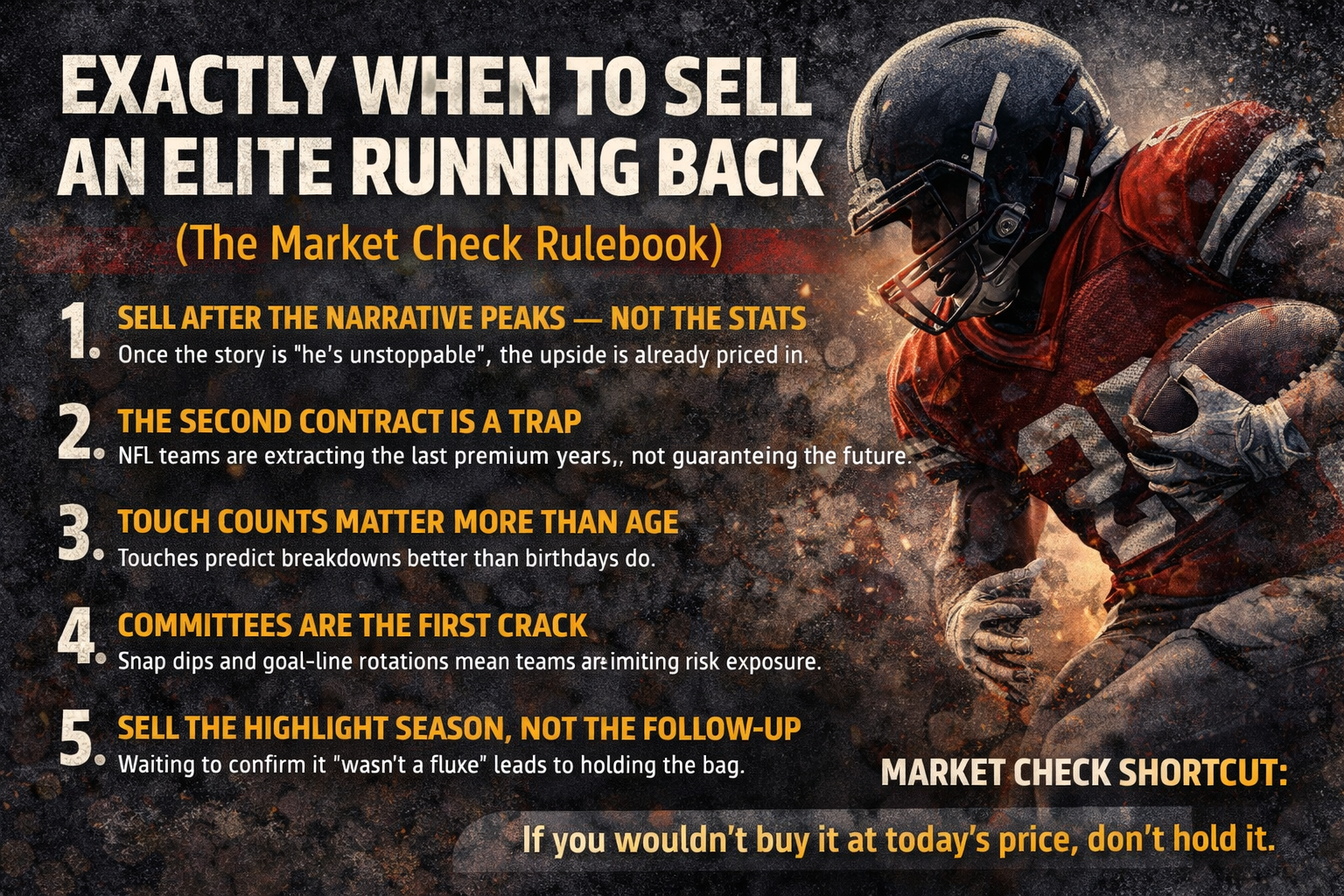
Exactly When to Sell an Elite Running Back (The Market Check Rulebook)
If you agree that running backs are short-term assets, the next question matters more than anything else:
When do you sell?
Because selling too early feels dumb. Selling too late is expensive.
This post is the answer collectors usually avoid because it removes hope, vibes, and “what if” from the equation.
This is about timing, not talent.
Rule #1: Sell After the Narrative Peaks — Not the Stats
Collectors wait for stats to fall off. Markets move when the story changes.
The best time to sell a running back is when: • Media is universally positive • Fantasy players are euphoric • Twitter comps start using Hall of Fame names
That is not safety. That is danger.
Once the narrative becomes “he’s unstoppable,” upside is already priced in.
Stats lag sentiment. Markets don’t.
Rule #2: The Second Contract Is a Trap
The moment a running back signs a big second contract, the clock accelerates.
Why? • Mileage is already baked in • Teams start managing touches • Replacement planning begins immediately
Collectors think: “They paid him. They believe in him.”
NFL teams think: “We’re extracting the last premium years.”
Second contracts rarely create long-term card value. They usually mark the top.
Rule #3: Touch Counts Matter More Than Age
Age is a lazy metric.
Touches are the real enemy.
Warning zone: • 1,200+ career touches = monitor closely • 1,500+ = sell into strength • 1,800+ = exit immediately
Running backs don’t decline gradually. They lose half a step—and the market loses patience instantly.
Rule #4: Committees Are the First Crack
The market ignores this at first.
Snap shares dip. Third downs disappear. Goal-line carries rotate.
Collectors call it “smart coaching.”
It’s not.
It’s the team quietly reducing risk exposure.
The moment a back stops being the unquestioned engine of the offense, long-term value is already gone.
Rule #5: Sell the Highlight Season, Not the Follow-Up
The worst mistake collectors make is waiting to “confirm it wasn’t a fluke.”
Monster season → SELL Career year → SELL “Best shape of his life” offseason → SELL
The follow-up season is where: • Soft tissue injuries appear • Efficiency drops • The market resets
You don’t sell because he’s bad. You sell because he was great.
The Market Check Shortcut
If you only remember one thing, remember this:
If you wouldn’t buy the card at today’s price, you shouldn’t be holding it.
Emotion makes collectors freeze. Markets punish hesitation.
The Final Truth
Great running backs don’t become bad investments because they fail.
They become bad investments because the window closes quietly—and then all at once.
Selling early feels uncomfortable. Selling late feels stupid.
The market doesn’t reward loyalty. It rewards timing.